2025 Was the Year AI Got Real

In the past year, AI has gone from a static tool to a companion users can collaborate with.

If 2024 was about welcoming AI to the broader consumer market through the rise of chat bots and web browser integrations, 2025 was about making that technology more intuitive and interactive, and human-like. Whether it’s putting a face to agentic AI or crafting wearables with AI utility, as the technology’s capabilities have improved, use cases have diversified both for consumers and businesses.

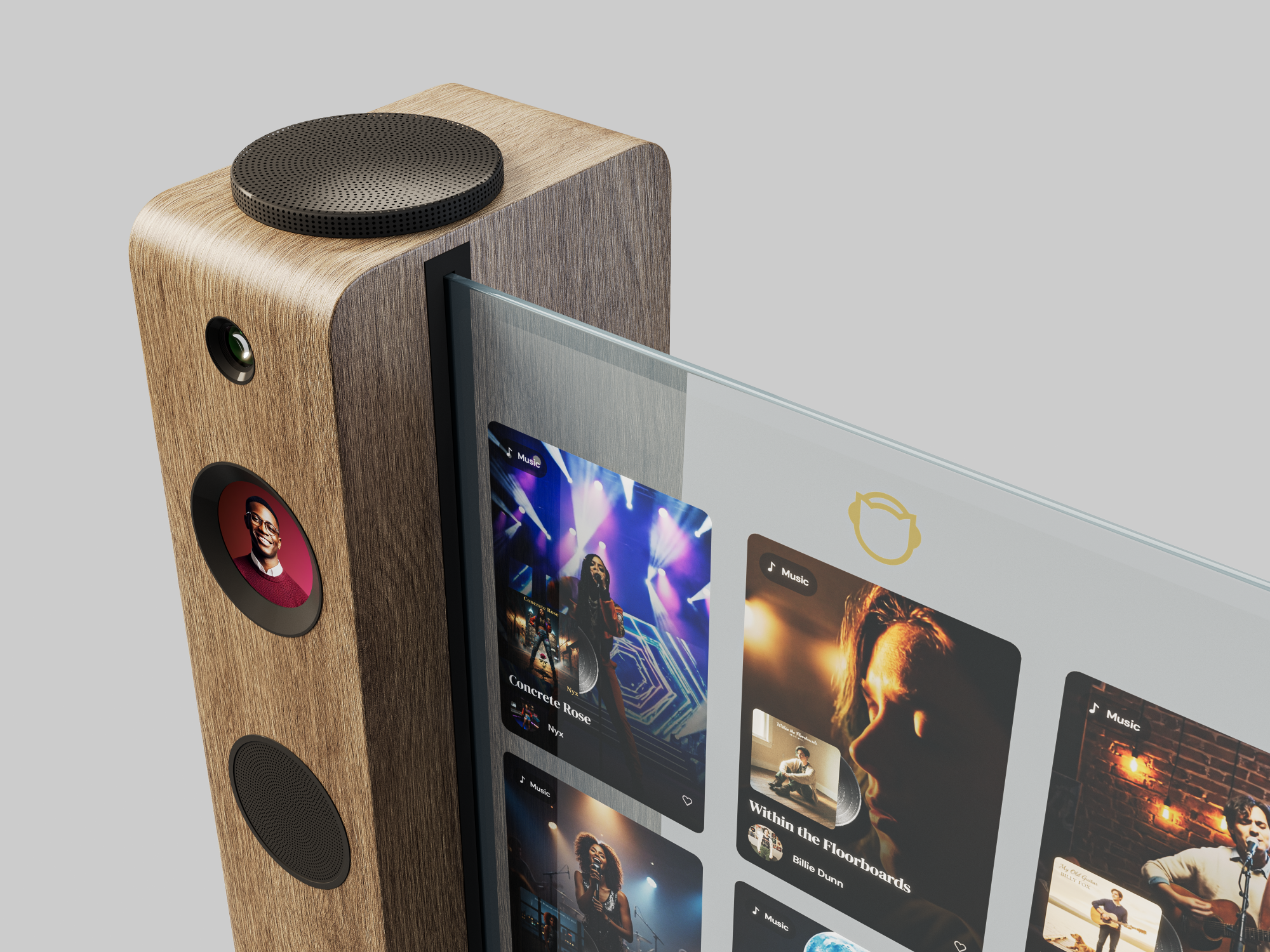
Voice conversations have replaced refined text prompts. Wristbands and smart glasses can summarize conversations, provide directions, and contextualize the world around you in new ways. And products like Napster View and Napster Station provide a crew of experts, available 24/7, to help solve everyday problems, from how to set up computer software to meal prep for the week.

2025 invited AI into the physical world, with all the possibilities and challenges that this kind of new integration presents. Here’s a look at how AI hardware has evolved throughout 2025 and what comes next.

2025 brings ebbs and flows for AI hardware

The hardware landscape witnessed massive swings in 2025 – some hits, some spectacular misses – that clarified the future of human-AI interaction.

On one hand, smart glasses experienced an explosion in popularity. According to recent market data, global shipments of smart glasses rose 110% year-over-year in the first half of 2025. Consumers also saw significant improvements in audio and video-based AI that could see what they saw and react in real time not just to a person’s voice, but the world around them.

But while some tech showed potential and built on some earlier success, there were also several failures in the AI hardware space. This year saw the collapse of some wearable technology products, most notably the Humane AI Pin, whose assets were acquired by HP in February, shortly after its first handful of product reviews. Consumers who already have powerful AI software available on their phones are choosier than ever when it comes to tech purchases, and they need proof that new hardware will add value that their current mobile device cannot. 

Just as importantly, AI hardware has to be affordable. Consumers and businesses aren’t necessarily concerned with huge data center construction and massive corresponding energy consumption. The infrastructure necessary to power AI can be debated, but what is clear is that AI has democratized access to expert knowledge, and the next logical step is taking that expertise out of a chat box and putting it onto a conversational screen that does not add a prohibitive layer of cost. 

It’s why products like the recently introduced Napster View, priced at $99 (and free with certain Napster subscriptions) and budget-friendly wearables like Bee are among the best-known products in this emerging market. Offering expansive and ever-increasing utility while maintaining affordability is table stakes, and sticking to that initial principle of democratizing access to this powerful technology is imperative. 

By the end of 2025, the message was unmistakable: AI doesn’t need to be louder or flashier to matter. It needs to be practical, affordable, and human-centered. With that bar now set, the next chapter will be less about invention and more about refinement.

Napster Blog

2025 Was the Year AI Got Real

In the past year, AI has gone from a static tool to a companion users can collaborate with.

If 2024 was about welcoming AI to the broader consumer market through the rise of chat bots and web browser integrations, 2025 was about making that technology more intuitive and interactive, and human-like. Whether it’s putting a face to agentic AI or crafting wearables with AI utility, as the technology’s capabilities have improved, use cases have diversified both for consumers and businesses.

Voice conversations have replaced refined text prompts. Wristbands and smart glasses can summarize conversations, provide directions, and contextualize the world around you in new ways. And products like Napster View and Napster Station provide a crew of experts, available 24/7, to help solve everyday problems, from how to set up computer software to meal prep for the week.

2025 invited AI into the physical world, with all the possibilities and challenges that this kind of new integration presents. Here’s a look at how AI hardware has evolved throughout 2025 and what comes next.

2025 brings ebbs and flows for AI hardware

The hardware landscape witnessed massive swings in 2025 – some hits, some spectacular misses – that clarified the future of human-AI interaction.

On one hand, smart glasses experienced an explosion in popularity. According to recent market data, global shipments of smart glasses rose 110% year-over-year in the first half of 2025. Consumers also saw significant improvements in audio and video-based AI that could see what they saw and react in real time not just to a person’s voice, but the world around them.

But while some tech showed potential and built on some earlier success, there were also several failures in the AI hardware space. This year saw the collapse of some wearable technology products, most notably the Humane AI Pin, whose assets were acquired by HP in February, shortly after its first handful of product reviews. Consumers who already have powerful AI software available on their phones are choosier than ever when it comes to tech purchases, and they need proof that new hardware will add value that their current mobile device cannot. 

Just as importantly, AI hardware has to be affordable. Consumers and businesses aren’t necessarily concerned with huge data center construction and massive corresponding energy consumption. The infrastructure necessary to power AI can be debated, but what is clear is that AI has democratized access to expert knowledge, and the next logical step is taking that expertise out of a chat box and putting it onto a conversational screen that does not add a prohibitive layer of cost. 

It’s why products like the recently introduced Napster View, priced at $99 (and free with certain Napster subscriptions) and budget-friendly wearables like Bee are among the best-known products in this emerging market. Offering expansive and ever-increasing utility while maintaining affordability is table stakes, and sticking to that initial principle of democratizing access to this powerful technology is imperative. 

By the end of 2025, the message was unmistakable: AI doesn’t need to be louder or flashier to matter. It needs to be practical, affordable, and human-centered. With that bar now set, the next chapter will be less about invention and more about refinement.

Category

Category

Author

Napster

Published

December 30, 2025

2025 Was the Year AI Got Real

Napster Blog

View all blog posts →

What can we build for you?

See how Enterprise can create your one-of-a-kind, immersive, 3D experience to help you drive deeper engagement, more revenue, and innovation for your brand.

Napster Spaces

From www to "wow" in under a minute. With a single click, watch as team of specialized AI agents activates to transform your website into an immersive, brand-aligned experience.

Start Free Trial

Heading

Subscript

What can we build for you?

See how iR Enterprise can create your one-of-a-kind, immersive, 3D experience to help you drive deeper engagement, more revenue, and innovation for your brand.

Heading 1

Heading 2

Heading 3

Heading 4

Heading 5
Heading 6

Lorem ipsum dolor sit amet, consectetur adipiscing elit, sed do eiusmod tempor incididunt ut labore et dolore magna aliqua. Ut enim ad minim veniam, quis nostrud exercitation ullamco laboris nisi ut aliquip ex ea commodo consequat. Duis aute irure dolor in reprehenderit in voluptate velit esse cillum dolore eu fugiat nulla pariatur.

Block quote

Ordered list

  1. Item 1
  2. Item 2
  3. Item 3

Unordered list

Text link

Bold text

Emphasis

Superscript

Subscript

close-icon
Iconimg