2025. The moment artificial intelligence finally got real. We stopped just talking at chatbots and started collaborating with them as actual companions. While 2024 was about introducing this tech to the world, 2025 focused on making it intuitive, interactive, and more human, with enormous leaps in models’ capabilities and how they autonomously complete tasks.
As we look toward 2026, the shift is going even deeper. We are moving beyond AI as a tool and into an era where it integrates into the fabric of our lives and work.
AI Bridges the Tribal Gap
We all view the world through a multidimensional prism built from our own family, friends, and social circles. Because these prisms are shaped differently, two people can look at the exact same fact and see two completely different realities.
There is a risk that AI could bulldoze these differences, flattening our unique cultures into one algorithmic monoculture. But in 2026, the real goal is epistemic bridging- or plainly, connection. Imagine an AI that acts as a translator between people’s points of view, one that helps us understand the reasons why someone else sees a situation so differently. By expanding the overlap between our circles, we can use this tech to reduce conflict.
AI can help us find common ground in a way we have not before, especially as it continues to hone its understanding of emotional nuances and context and engages more with our physical world.
The way we talk to machines is also fundamentally changing. We are moving past the days of refined text prompts and into a world where voice-enabled AI is the norm. Voice is how we build common knowledge, the specific type of shared understanding that indicates I know that you know what I know. This shared awareness is what turns a crowd of individuals into a tribe with its own world view and goals.
As AI integrates the common knowledge of millions of people of different backgrounds, it will be able to build more complex personas and become closer, in spirit, to the human form factor. That’s when this technology becomes truly life-changing.
Breaking the Screen Barrier
The hardware shifts of 2025 made it clear that we do not want AI to be louder or flashier. Instead, we want it to be practical and to fit within our everyday lifestyle. Smart glasses saw a 110% jump in shipments because they finally let AI see what we see in real time, and while the tech is still improving, the use case is clearer than it’s been before. Meanwhile, OpenAI is reportedly considering a dip into hardware, and companies such as Limitless and Bee are pushing AI wearables into the marketplace.
One of the biggest challenges facing AI right now is its inability to ground itself in the physical world. The iteration of AI toward being able to fully contextualize the world around us is a hot topic for everyone, including Nvidia CEO Jensen Huang, who said during a CES keynote that he believes physical AI is approaching its “ChatGPT moment.”
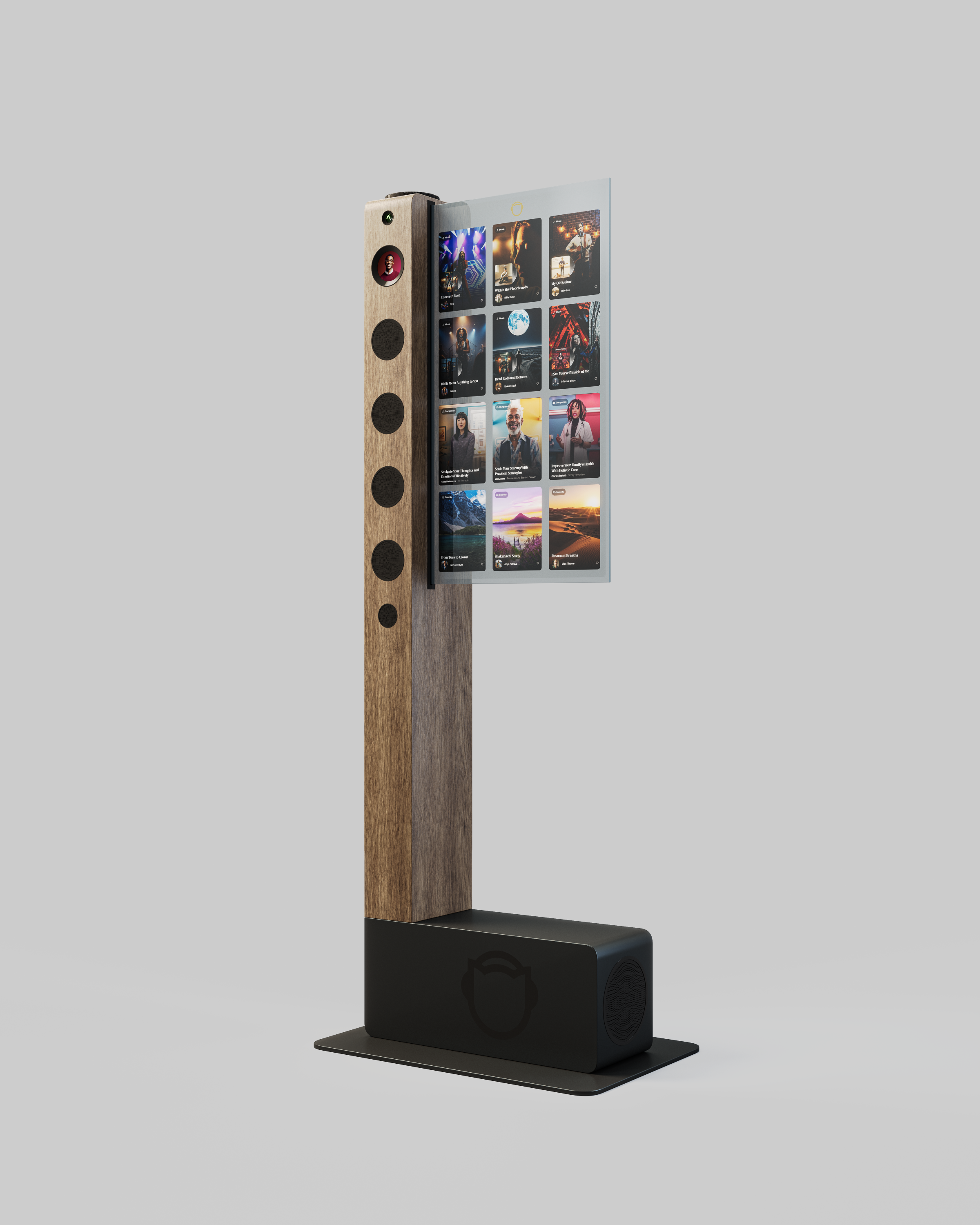
In 2026, the prohibitive layer of cost that often comes with this new hardware will finally fall away. Products like Napster View are already proving that a crew of 24/7 experts can help elevate our lives without costing hundreds of dollars. Napster Station, which debuted at CES, is also part of proving that physical AI can be a collaborator in every situation vs. just a note-taker. This change is about democratizing expertise so it is available whenever you need it.
While artificial general intelligence will remain a staple talking point in the industry, the rise of specialized products and agents trained on deep expertise in select areas will define 2026.
AI Gets Its Big Break in Music and Media
In music and entertainment, AI is transitioning from a production tool to social radio. As we look to next year, fans will interact with personalized media diets where AI agents manage discovery, trivia, and community engagement, and even create some of the content they regularly interact with.
Platforms like Napster will facilitate these interactive ecosystems and make creation – of content, of media, of expertise – more accessible than ever. These tools at their best also empower creatives to focus on what they do best, work faster, and build more.
Meanwhile, the social implications of lowering the barriers to more complex content creation will be immense. Voices we haven’t heard will come to light, new perspectives will be shared, and we’ll all have a chance to see things in ways we otherwise wouldn’t.
2025. The moment artificial intelligence finally got real. We stopped just talking at chatbots and started collaborating with them as actual companions. While 2024 was about introducing this tech to the world, 2025 focused on making it intuitive, interactive, and more human, with enormous leaps in models’ capabilities and how they autonomously complete tasks.
As we look toward 2026, the shift is going even deeper. We are moving beyond AI as a tool and into an era where it integrates into the fabric of our lives and work.
AI Bridges the Tribal Gap
We all view the world through a multidimensional prism built from our own family, friends, and social circles. Because these prisms are shaped differently, two people can look at the exact same fact and see two completely different realities.
There is a risk that AI could bulldoze these differences, flattening our unique cultures into one algorithmic monoculture. But in 2026, the real goal is epistemic bridging- or plainly, connection. Imagine an AI that acts as a translator between people’s points of view, one that helps us understand the reasons why someone else sees a situation so differently. By expanding the overlap between our circles, we can use this tech to reduce conflict.
AI can help us find common ground in a way we have not before, especially as it continues to hone its understanding of emotional nuances and context and engages more with our physical world.
The way we talk to machines is also fundamentally changing. We are moving past the days of refined text prompts and into a world where voice-enabled AI is the norm. Voice is how we build common knowledge, the specific type of shared understanding that indicates I know that you know what I know. This shared awareness is what turns a crowd of individuals into a tribe with its own world view and goals.
As AI integrates the common knowledge of millions of people of different backgrounds, it will be able to build more complex personas and become closer, in spirit, to the human form factor. That’s when this technology becomes truly life-changing.
Breaking the Screen Barrier
The hardware shifts of 2025 made it clear that we do not want AI to be louder or flashier. Instead, we want it to be practical and to fit within our everyday lifestyle. Smart glasses saw a 110% jump in shipments because they finally let AI see what we see in real time, and while the tech is still improving, the use case is clearer than it’s been before. Meanwhile, OpenAI is reportedly considering a dip into hardware, and companies such as Limitless and Bee are pushing AI wearables into the marketplace.
One of the biggest challenges facing AI right now is its inability to ground itself in the physical world. The iteration of AI toward being able to fully contextualize the world around us is a hot topic for everyone, including Nvidia CEO Jensen Huang, who said during a CES keynote that he believes physical AI is approaching its “ChatGPT moment.”
In 2026, the prohibitive layer of cost that often comes with this new hardware will finally fall away. Products like Napster View are already proving that a crew of 24/7 experts can help elevate our lives without costing hundreds of dollars. Napster Station, which debuted at CES, is also part of proving that physical AI can be a collaborator in every situation vs. just a note-taker. This change is about democratizing expertise so it is available whenever you need it.
While artificial general intelligence will remain a staple talking point in the industry, the rise of specialized products and agents trained on deep expertise in select areas will define 2026.
AI Gets Its Big Break in Music and Media
In music and entertainment, AI is transitioning from a production tool to social radio. As we look to next year, fans will interact with personalized media diets where AI agents manage discovery, trivia, and community engagement, and even create some of the content they regularly interact with.
Platforms like Napster will facilitate these interactive ecosystems and make creation – of content, of media, of expertise – more accessible than ever. These tools at their best also empower creatives to focus on what they do best, work faster, and build more.
Meanwhile, the social implications of lowering the barriers to more complex content creation will be immense. Voices we haven’t heard will come to light, new perspectives will be shared, and we’ll all have a chance to see things in ways we otherwise wouldn’t.
Founded on the principle of democratizing access—first to music in 1999, now to creative expertise in 2025—Napster has consistently been at the forefront of transformational technology shifts that expand markets and empower users. The company’s latest platform turns passive consumers into active creators, providing the interface layer between foundation AI models and human creativity.
See how Enterprise can create your one-of-a-kind, immersive, 3D experience to help you drive deeper engagement, more revenue, and innovation for your brand.
From www to "wow" in under a minute. With a single click, watch as team of specialized AI agents activates to transform your website into an immersive, brand-aligned experience.
Lorem ipsum dolor sit amet, consectetur adipiscing elit. Suspendisse varius enim in eros elementum tristique. Duis cursus, mi quis viverra ornare, eros dolor interdum nulla, ut commodo diam libero vitae erat. Aenean faucibus nibh et justo cursus id rutrum lorem imperdiet. Nunc ut sem vitae risus tristique posuere.
See how iR Enterprise can create your one-of-a-kind, immersive, 3D experience to help you drive deeper engagement, more revenue, and innovation for your brand.
Lorem ipsum dolor sit amet, consectetur adipiscing elit, sed do eiusmod tempor incididunt ut labore et dolore magna aliqua. Ut enim ad minim veniam, quis nostrud exercitation ullamco laboris nisi ut aliquip ex ea commodo consequat. Duis aute irure dolor in reprehenderit in voluptate velit esse cillum dolore eu fugiat nulla pariatur.






.svg)


